Pokies Parlour Casino Australia: What to Know
 Available in US
Table of Contents
- What Are Pokies and How They Shape the Australian Gaming Landscape
- Understanding Pokies Parlour Bonuses, Deposits and Sign‑Up Offers
- Parlour Casinos: How Pokies Fit Into Australian Pub and Club Venues
- VIP Parlour Casinos: Premium Services and Regulatory Expectations
- Pokie Parlour Bonus Mechanics and Common Pitfalls
What Are Pokies and How They Shape the Australian Gaming Landscape
Defining the Terminology and the Machines
When you look at the gaming landscape in Australia, the term you hear most frequently is "pokies." It is the colloquial Australian term for electronic gaming machines (EGMs). While the formal regulatory and legislative texts refer to them as electronic gaming machines, the public discourse entirely revolves around pokies. Understanding what these machines are requires looking past the flashing screens and sound effects to see a highly structured computational environment built on probability, user interaction, and financial tracking.
An electronic gaming machine is a device where a user wagers money on the outcome of a simulated event. The machine accepts currency, registers the wager, calculates the outcome using a random number generator, displays the result, and either retains the wager or dispenses a payout. In the context of the Australian market, these machines are not a novelty or a niche interest; they are the foundational pillar of the local gambling ecosystem. You find them in dedicated casino floors, in local pubs, and in registered clubs across the country.
Before you pick a pokies parlour to play at in 2026, it helps to know what’s behind the welcome offer — the licence, the wagering terms, and how quickly you can actually get paid matter more than the headline number.
License: Curacao Gaming Control Board OGL/2023/176/0095 (Hollycorn N.V.) · Bonus: up to A$1,500 + 200 free spins across 3 deposits Licensed under the Curacao Gaming Control Board through Hollycorn N.V., this venue backs up its credentials with a multi-deposit welcome package worth up to A$1,500 plus 200 free spins.
Bonus: up to A$750 + 50 jackpot spins, 35x wagering · Payout speed: crypto ~90 minutes, fiat 1-5 days · Min. deposit: A$30 You get a jackpot-spins bonus up to A$750 with clearly stated 35x wagering, a low A$30 minimum deposit, and notably fast crypto payouts alongside standard fiat processing times.
License: Curacao Gaming Authority (Jumpman Gaming Ltd) · Bonus: up to A$6,600 + up to 250 free spins across 4 deposits Operating under a Curacao Gaming Authority licence via Jumpman Gaming Ltd, it offers one of the larger welcome packages on this list, spread across four deposits with up to 250 free spins.
License: Curacao Gaming Control Board OGL/2023/174/0082 (Dama N.V.) · Bonus: up to A$5,000 + 300 free spins across 4 deposits Licensed by the Curacao Gaming Control Board under Dama N.V., this site pairs a sizeable four-deposit bonus with up to 300 free spins for new players.
License: international iGaming licence – jurisdiction not named in the source · Bonus: 100% up to A$1,000 + 100 free spins, 35x wagering · Payout speed: PayID 1-24 hours · Min. deposit: A$30 (PayID from A$10) While its licensing jurisdiction isn’t specified, it stands out for PayID support with a low minimum deposit and payouts processed within a day, alongside a 35x wagering welcome bonus.
License: Curacao · Bonus: up to A$10,000 multi-stage + 500 free spins · Min. deposit: A$20 (POLi) Curacao-licensed with a substantial multi-stage bonus reaching up to A$10,000 plus 500 free spins, and a low entry point via POLi deposits.
License: Curacao Gaming Control Board OGL/2023/176/0095 (Hollycorn N.V.) · Bonus: up to A$11,000 + 300 free spins (code NEO100) Licensed through the Curacao Gaming Control Board under Hollycorn N.V., it offers a large bonus package up to A$11,000 with 300 free spins unlocked via a specific promo code.
License: Curacao eGaming OGL/2024/923/0383 (Antillephone N.V.) · Bonus: up to A$2,000 + 100 free spins across 2 deposits · Min. deposit: A$30 Holding a Curacao eGaming licence via Antillephone N.V., it offers a two-deposit welcome bonus up to A$2,000 with 100 free spins and a modest minimum deposit requirement.
License: Curacao eGaming (Dama N.V.) · Bonus: up to A$10,000 + 180 free spins, 40x wagering Licensed under Curacao eGaming through Dama N.V., this operator offers a substantial welcome bonus up to A$10,000 with 180 free spins, subject to 40x wagering.
License: Curacao – Antillephone N.V. (Versus Odds B.V.) · Bonus: up to EUR 2,000 across 5 deposits + 200 free spins · Min. deposit: EUR 20 Licensed in Curacao via Antillephone N.V. under Versus Odds B.V., it spreads its bonus across five deposits plus 200 free spins, with a low minimum deposit to get started.
The mechanical simplicity of inserting funds and pressing a button masks a complex regulatory and social framework. To understand the landscape, you have to look at how these machines operate, where they are located, and how the financial flows move through them. The conversation around a pokies parlour or a specific casino venue in Australia in 2026 inherently starts with the machines themselves, because the machines dictate the rhythms of the venues, the behaviours of the players, and the obligations of the operators.
The Geographic Distribution Across the Country
The presence of these machines is not restricted to a single city or a specific type of establishment. Electronic gaming machines are operated in all Australian states, the Australian Capital Territory, and the Northern Territory. This nationwide footprint means that the regulatory environment must balance Commonwealth laws with state and territory-level oversight.
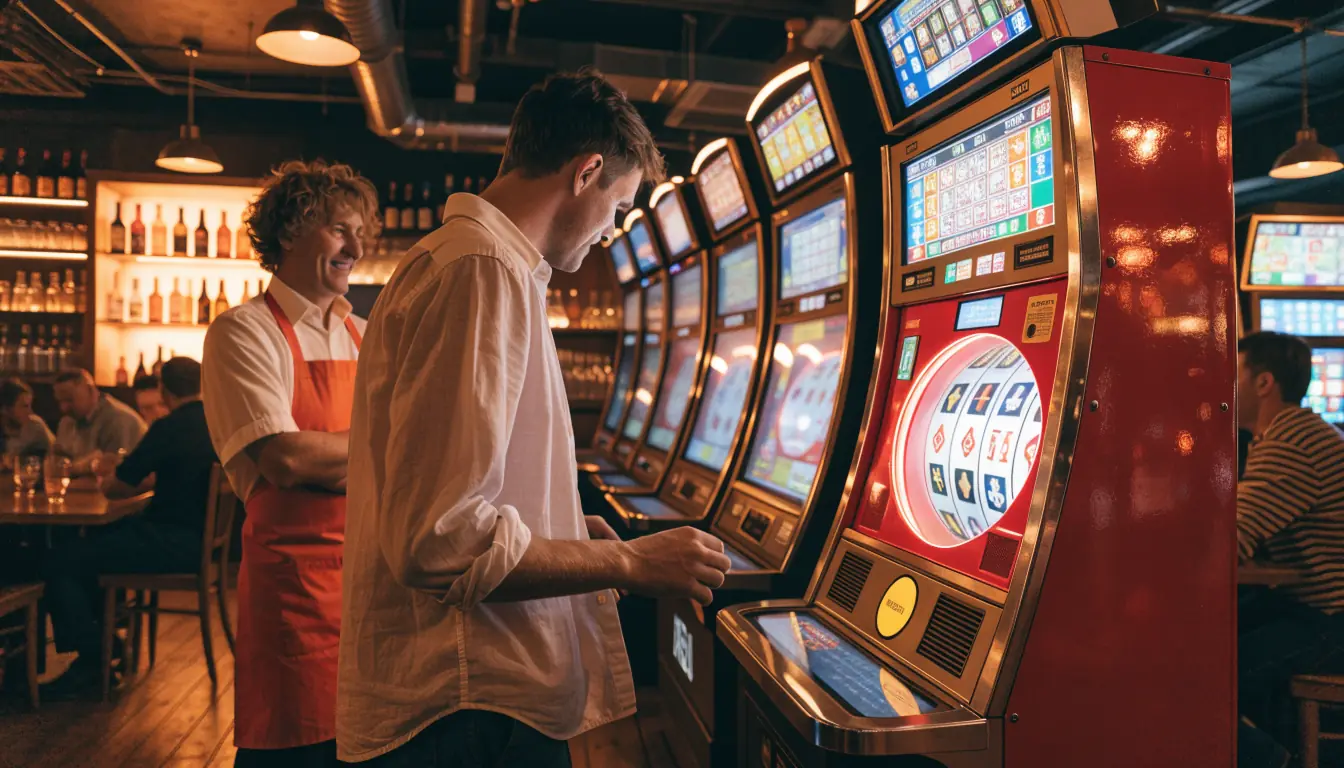
You encounter these machines in three primary environments: casinos, pubs, and clubs. Casinos operate as large-scale entertainment venues with dedicated gaming floors, while pubs and clubs integrate electronic gaming machines into their broader hospitality offerings. This integration into everyday social spaces is a defining characteristic of the Australian landscape. A venue might serve food and drinks, host community meetings, and run a dedicated room or area filled with pokies.
Because the machines are so deeply woven into the fabric of local communities, the volume of interaction is immense. The proliferation of these machines has led to a domestic market that is unique in its scale and intensity. When you review the operational reality of any parlour-style casino area inside a pub or a club, the presence of these machines dictates the layout of the room, the flow of staff, and the security requirements of the venue.
The Scale of Financial Turnover
To grasp the sheer volume of activity on these machines, you have to look at the financial turnover. In the financial year 2020-2021, Australians placed bets worth almost AUD 150 billion on electronic gaming machines. This figure represents the total amount wagered, reflecting the rapid cycle of betting, winning, and re-betting that occurs on the machines. Because a single dollar can be wagered multiple times if it is won and played again, the turnover figure represents the aggregate velocity of money through the machines, rather than the total amount of unique money introduced by players.
Looking at more recent data, the scale remains massive. According to data from complyadvantage.com, pokies generated AUD 191.2 billion in gambling turnover in 2023. This indicates that the flow of money through these machines continues to grow, reflecting both the embedded nature of the machines in the culture and the continuous operation of the venues that house them.
However, turnover is only one side of the equation. The money that flows through the machines is heavily retained by the operators. In the financial year 2020-2021, the total player loss from electronic gaming machines was about AUD 12 billion. This is the amount that players wagered and did not win back. This figure represents the revenue captured by the venues and the tax revenue collected by the government, and it highlights the extractive nature of the machines. When you place a bet, the mathematical architecture of the machine ensures that over time, the cumulative wagers will result in a net loss for the player base.
Measuring the Individual Impact
Aggregate national figures can obscure the individual experience. To understand the pressure these machines place on individuals, you look at per-capita losses. In the financial year 2020-2021, per-capita losses from electronic gaming machines were AUD 608. This means that when averaged across the entire population, every person in Australia effectively lost AUD 608 to these machines over the course of the year.
This per-capita metric is crucial for understanding the social weight of the machines. It demonstrates that the financial impact is not marginal or limited to a tiny fraction of the population; it is a broad economic factor. When you consider that this figure accounts for every person, including those who do not play, the actual loss per player is significantly higher. The concentration of these losses among regular players creates severe personal and financial pressures, which regulators and community services continually attempt to mitigate.
Financial Risk
Per‑capita losses of AUD 608 mean that the average Australian loses a substantial amount each year; playing pokies can quickly drain personal finances.
Australia in the Global Context
The density of these machines in Australia is a frequent subject of international comparison. When assessing how Australia fits into the global market, you encounter conflicting data regarding the nation’s share of the world’s machines. Sources diverge on this point: one version indicates that Australia accounts for 3% of the world’s pub and club poker machines, while another version suggests that Australia accounts for about 18% of the world’s poker machines.
This discrepancy highlights the difficulty in obtaining perfectly aligned global statistics, as different methodologies may count machines differently or separate pub and club machines from casino machines. However, both figures point to the same underlying reality: Australia possesses a disproportionately high concentration of these machines relative to its population. Whether it is 3% or 18% of the global total, the domestic saturation is profound, making the management of these machines a persistent priority for domestic policymakers.
The Mechanics of Everyday Play
When you walk into a venue and observe the machines in operation, you see a specific pattern of behaviour. Players sit at the machines, insert cash or a card, and engage in rapid, repetitive betting. The speed of play is a critical factor in how the machines operate. Because the outcome of each spin or round is determined almost instantly, a player can place dozens or hundreds of wagers per hour.
This rapid cycle is what drives the massive turnover figures discussed earlier. The machine is designed to accept continuous input and to provide continuous visual and auditory feedback. The sensory environment of a pokies parlour or a casino gaming floor is engineered to sustain this engagement. The screens, the sounds, and the ergonomic design of the terminals all work to keep the player focused on the next spin.
Understanding this mechanic is essential for understanding the broader landscape. The machines are not passive entertainment devices; they are active engines of financial transfer. Every second spent at the machine represents a calculated financial exchange governed by the machine’s internal programming. The player’s interaction is reduced to a series of inputs, each carrying a financial consequence.
The Social Environment of the Parlour
The venues that house these machines are broadly referred to in various ways, including the parlour model. A parlour casino or a pokies parlour represents a specific type of gaming environment. While large standalone casinos offer a wide array of table games and international gaming options, the parlour environment focuses heavily or exclusively on electronic gaming machines.
These environments range from dedicated rooms within larger pubs to specific sections of registered clubs. The atmosphere in these spaces is distinct from the general bar area. The lighting, the acoustics, and the layout are all optimized for the machines. You will notice that the spaces are designed to minimize distraction from the outside world, creating an enclosed, self-sustaining environment where the focus remains entirely on the screens.
When you read a pokies parlour casino review or look for a pokies parlour casino aussie experience, you are looking at an assessment of these environmental factors alongside the financial ones. The quality of the seating, the availability of ATMs, the proximity of staff, and the density of the machines all contribute to the operational reality of the parlour. The design of the room serves the machines, ensuring that the flow of players and the flow of money remain uninterrupted.
The Legal Framework for Venues
The operation of these machines is not a free market. It is heavily regulated by state and territory governments, which issue the licences required to operate the machines. The legal landscape dictates how many machines a venue can operate, where they can be placed, and how they must be configured.
The Interactive Gambling Act 2001 is the primary Commonwealth law governing online gambling in Australia. While this act focuses on the online sphere, it establishes the federal posture toward gambling regulation, which is centered on harm minimisation. For the physical machines in pubs and clubs, the regulation is managed locally. However, the federal perspective influences how the industry operates, particularly regarding the movement of money and the tracking of financial transactions.
The legal age for gambling in Australia is 18. Venues are required to enforce this strictly. If you operate a venue, you are responsible for ensuring that minors do not access the gaming area. This is a foundational compliance requirement that applies to every single venue holding a licence to operate electronic gaming machines.
Venues must obtain a state licence, keep player identification records, and report suspicious matters to AUSTRAC.
The Intersection of Cash and Anonymity
A defining feature of the traditional pokies landscape is the role of cash. Historically, these machines have operated primarily on cash. Players insert notes, play the machines, and receive payouts in the form of cash or tickets that can be redeemed at a terminal or with staff. This reliance on physical currency creates a specific set of challenges for regulators and law enforcement.
The high volume of cash transactions and the limited traceability of pokies make them attractive for money laundering. When a person walks into a venue with a large amount of cash, the ability of the venue to track the source of those funds is limited. The machine accepts the cash, and the transaction is recorded as a wager.
This dynamic creates a vulnerability. Criminals exploit this by inserting large sums of cash into EGMs, performing minimal gambling activity, and then cashing out. This process creates a false record of winnings. The money that comes out of the machine is now associated with a gambling payout rather than with its illicit source. This conversion of "dirty" money into seemingly "clean" funds is a primary driver behind the regulatory push to reform how the machines handle money.
Methods of Financial Exploitation
The techniques used to exploit the cash-heavy nature of the machines are varied and specific. Offenders purchase winning tickets from other players. If a player has won a small amount and is leaving the venue, a criminal might offer to buy that winning ticket from them using cash. The criminal then takes the ticket to the counter and receives the payout. The venue records the transaction as a legitimate payout to the ticket holder, further obscuring the origin of the funds.
Another method is structuring across venues. This involves spreading smaller cash deposits across different venues to avoid AML reporting thresholds. If a regulation requires venues to report cash transactions over a certain amount, a person attempting to launder money will visit multiple venues, inserting amounts just below that threshold into the machines at each location. By spreading the deposits, they attempt to avoid triggering the regulatory reporting requirements.
These methods rely on the physical nature of cash and the fragmented nature of venue reporting. Because each pub or club operates as an individual entity, tracking a person who moves rapidly between multiple venues with large amounts of cash is exceptionally difficult without a centralized, account-based system.
Identifying Red Flags in Machine Usage
To combat these activities, regulators and compliance officers look for specific patterns of behaviour. These indicators, known as red flags, help identify when the machines are being used for purposes other than entertainment. AUSTRAC, the Australian financial intelligence agency, provides guidance on these indicators.
A primary red flag is large or repeated cash insertions followed by minimal play and immediate cash-out. If a person walks up to a machine, inserts a significant amount of money, spins once or twice, and then immediately collects their balance and leaves, this pattern does not align with normal recreational use. The intent is not to gamble, but to use the machine to process the funds.
Another indicator is frequent small redemptions across different venues within a short period. This points directly to the structuring method mentioned earlier. If an individual is identified redeeming funds at multiple different locations in a single day, it suggests a coordinated effort to move money without attracting attention.
Furthermore, customers refusing identification or using multiple player cards constitute a red flag. If a player is asked for identification when collecting a large payout and refuses, or if staff notice the same individual using different loyalty cards or player accounts to avoid creating a single, traceable profile, this warrants scrutiny. These behaviours indicate an attempt to maintain anonymity and sever the link between the player and the money.
The Push for Account-Based Systems
The structural solution to these traceability problems is the adoption of cashless, account-based systems. According to data from facctum.com, the adoption of cashless, account-based pokies improves traceability and reduces anonymity. This represents a significant shift in how the machines operate.
Instead of inserting cash, a player would use an account linked to their identity. Funds are deposited digitally, and all gameplay and withdrawals are tied to that specific account. Transparent, account-based pokies provide full traceability of deposits, gameplay, and withdrawals. Every transaction is logged against a verified user, eliminating the ability for an anonymous individual to insert cash and walk away with "clean" funds.
Regulators recommend tighter customer due diligence, transaction monitoring, and the adoption of cashless gaming systems. This push is not merely a technical upgrade; it is a fundamental change to the operational model of the parlour. It requires venues to invest in new infrastructure, players to adapt to new methods of play, and compliance teams to build new monitoring capabilities.
This shift also changes the nature of a pokies parlour casino review. The quality and security of the digital account system, the ease of digital deposits, and the robustness of the identity verification process become central to the experience. The move away from cash alters the relationship between the player and the machine, replacing the anonymity of physical currency with the persistent, traceable record of a digital account.
Regulatory Obligations Based on Machine Volume
The requirements placed on a venue depend on the scale of its operations. Regulators distinguish between smaller venues and larger ones based on the number of machines they operate.
Operators with up to 15 pokies must register with AUSTRAC, keep identification records, and submit suspicious matter reports. These requirements establish a baseline of compliance, ensuring that even small venues are integrated into the national financial intelligence framework. They must know who their players are and report anything that looks irregular.
For larger venues, the requirements are more stringent. Operators with more than 15 pokies must appoint a compliance officer, conduct risk assessments, implement AML/CFT programs, perform customer due diligence, and report cash transactions over AUD 10,000. This higher tier of regulation reflects the increased risk that comes with a larger volume of machines and a higher potential throughput of cash.
If a venue operates a pokies parlour casino with a significant number of machines, the operational overhead is substantial. The compliance officer must oversee the implementation of the AML/CFT program, ensuring that staff are trained to identify red flags, that customer due diligence is performed correctly, and that all reportable transactions are filed. Failure to meet these obligations carries severe consequences. Non-compliant operators may receive remedial directions, infringement notices, civil fines, and suffer reputational damage.

The Reality of Playing Online
While the physical parlour environment is well-defined and regulated under state law, the online landscape presents a different legal reality. If you are looking for a pokies parlour casino to play online, it is crucial to understand the legal boundaries. The Interactive Gambling Act 2001 makes it an offence for online operators to offer real-money gambling to Australian residents.
Specifically, online casino style games, including slots, poker, blackjack, and roulette, are prohibited under the Interactive Gambling Act 2001. There are no domestically licensed real-money online casino operators available to Australian players. It is illegal to offer online casino gambling in Australia, and it is not possible to obtain a licence to operate an online casino domestically.
This means that any platform offering a pokies parlour casino play online experience to Australian residents is operating outside of the domestic legal framework. The law targets the operators, not the players. It is not illegal for individual Australians to play at offshore-licensed online casinos, but the operators themselves are violating Commonwealth law by providing the service.
This creates a fragmented and risky environment for users. Without domestic regulation, there is no local oversight of the games’ fairness, the security of player funds, or the integrity of the bonus structures. The protections that exist in a physical, licensed venue do not extend to the offshore online space.
Player Demographics and Behaviour
The legal restrictions and the physical prevalence of the machines shape who plays them. Gambling is a widespread activity across the adult population. Almost one in three (30%) 12-17-year-olds in Australia gamble, and 46% of 18-year-olds in Australia gamble. These figures highlight the normalisation of gambling within the culture.
While the minimum legal gambling age is 18, the engagement of younger demographics indicates that gambling is a visible and accessible part of the social environment. For adults, the pokies parlour is a common destination. The behaviour within these venues is characterised by sustained, solitary play. Unlike table games, which involve interaction with a dealer and other players, the electronic gaming machine is a solitary experience. The player interacts solely with the machine.
Underage Exposure
Almost one in three (30%) 12‑17‑year‑olds gamble, so venues must enforce age checks rigorously despite the legal gambling age being 18.
This solitary nature has implications for how problems develop. A player can sit at a machine for hours without other patrons or staff noticing the extent of their losses. The account-based systems being introduced to combat money laundering also serve a dual purpose: they provide data that can be used to identify problematic gambling patterns. By tracking a player’s deposits, frequency of play, and losses over time, venues and regulators can intervene when behaviour crosses from entertainment into distress.
The Role of Taxation
The financial mechanics of the pokies landscape also involve taxation. Gambling operators in Australia are subject to taxation, and the specifics vary by state and by type of gambling service. The tax revenue generated from electronic gaming machines is a significant source of income for state governments.
This creates a complex dynamic. The government relies on the revenue generated by the losses of players, yet it is also responsible for minimising the harm caused by those losses. The tension between revenue generation and harm minimisation is a constant theme in Australian gambling policy.
Conversely, gamblers’ winnings in Australia are not taxed. If a player hits a substantial payout on a machine, they receive the full amount without a tax deduction. This asymmetry—where losses generate state revenue but winnings are tax-free for the player—is a fundamental aspect of the financial landscape. It means the government’s financial interest lies entirely in the aggregate losses of the player base, rather than in the individual successes of players.
Understanding Promotional Offers
In the competitive environment of venues and offshore platforms, promotional offers are a primary tool for attracting and retaining players. If you are looking for a pokies parlour free chip, pokies parlour free spins, or a general pokies parlour bonus, you are engaging with the marketing apparatus designed to drive traffic to the machines.
While the next section will explore the mechanics of these bonuses in greater detail, it is essential to understand their role in the broader landscape. Bonuses are used to lower the barrier to entry. A free spin or a free chip gives a player a chance to engage with the machine without immediately risking their own money. However, these offers come with conditions. The terms attached to these promotions dictate how the bonus can be used, how any resulting winnings can be withdrawn, and what the player must do to unlock the full value of the offer.
In a physical venue, bonuses might take the form of free play vouchers or loyalty points. In the offshore online space, where the domestic regulations do not apply, the offers can be more aggressive and the terms less transparent. The discrepancy between the regulated domestic environment and the unregulated offshore environment means that a player must approach offers with caution, understanding that the promotional language is designed to encourage play, not necessarily to provide value.
The Evolution of the Parlour Model
The concept of the parlour is evolving. Historically, a parlour referred to a room filled with machines where the primary activity was playing. Today, the integration of technology is changing what a parlour is. The move toward cashless systems, the implementation of account-based play, and the increased regulatory oversight mean that the modern pokies parlour is a highly monitored environment.
Operators are required to balance the provision of entertainment with strict compliance obligations. The physical layout of the room must accommodate the machines, the payment terminals, and the staff required to monitor the floor. In a pokies parlour casino setting, the environment is segmented. High-traffic areas cater to standard play, while other areas might be reserved for higher-stakes or VIP play, each carrying different levels of oversight and different customer due diligence requirements.
The Australian gaming landscape is not static. The data from 2020-2021 shows a massive, cash-heavy market. The data from 2023 indicates continued growth. The regulatory push toward traceability and the strict boundaries of the Interactive Gambling Act 2001 shape every aspect of how the machines are built, how they are played, and how the venues operate.
The Cashless Imperative and Traceability
The movement toward cashless gaming is the most significant structural change on the horizon. The reliance on cash has made the machines a target for financial crime. The red flags—structuing, minimal play with large cash inserts, refusal of identification—are all symptoms of a system that allows anonymous cash to flow through without a verified link to the player.
Improved Traceability
Moving to account‑based pokies gives operators and regulators full visibility of deposits, play and withdrawals, reducing money‑laundering risk.
Transparent, account-based pokies provide full traceability of deposits, gameplay, and withdrawals. This means that every dollar entered into the machine, every spin, and every dollar cashed out is recorded against a specific, verified account. For the regulator, this provides the data necessary to detect and prosecute money laundering. For the venue, it provides a clear record of compliance and a defence against the exploitation of their machines.
For the player, it means the end of the anonymous parlour experience. You cannot walk into a venue, insert a pocketful of cash, and leave without a record. The system requires you to identify yourself, to link your funds to a digital identity, and to play within a tracked environment. This shift is driven by the necessity of combating financial crime, but it also fundamentally alters the nature of the player’s interaction with the machine.
Local Enforcement and Specific Reports
The push for reform is not purely theoretical. Specific incidents and reports have driven regulatory action. The 2022 NSW Isington Report recommended making all NSW pokies cashless by the end of 2028. This is a specific legislative recommendation aimed at a specific jurisdiction, reflecting the localised nature of the regulatory response. While the sources note this as a recommendation from a specific report rather than an established market norm, it clearly indicates the direction of travel for the industry.
Furthermore, an amendment to the Casino Control Act 1992 allows NSW casino operators to be fined up to AUD 100 million for compliance failures. This staggering potential penalty underscores the severity with which regulators view non-compliance. It places the burden of maintaining the integrity of the financial system squarely on the shoulders of the casino operators. If a venue fails to implement the necessary AML/CFT programs, fails to perform customer due diligence, or fails to report the required transactions, the financial consequences can be terminal.
The Intersection of Local and Federal Law
The regulatory landscape is a patchwork of state and Commonwealth law. The Interactive Gambling Act 2001 governs the online space, prohibiting the provision of online casino games to Australian residents. The state and territory laws govern the physical machines, setting the rules for how they operate, how many can be installed, and how they must be monitored.

This intersection creates a complex environment for any operator. A physical venue must navigate state-level licensing, local council regulations, and state-based AML requirements, all while adhering to the broader framework established by AUSTRAC. An offshore operator targeting Australian players faces a different set of risks, primarily the violation of the Interactive Gambling Act 2001, enforced by the Australian Communications and Media Authority (ACMA).
If you are assessing a venue or an operator, understanding which body regulates it is the first step. The ACT Gambling and Racing Commission, the Office of Liquor and Gaming Regulation, and the NSW regulator all play distinct roles in their respective jurisdictions. The existence of these multiple bodies reflects the size and complexity of the market. It also means that a uniform national approach to issues like harm minimisation and money laundering is often complicated by the need to coordinate across different regulatory frameworks.
The Role of the Community
The prevalence of the machines means that the impact extends beyond the individual player and the venue. The per-capita loss of AUD 608 in 2020-2021 represents money that was not spent in other sectors of the economy. It represents funds removed from household budgets. The social cost of gambling harm includes financial distress, relationship breakdowns, and mental health struggles.
Because the machines are so widely used in Australian pubs, clubs, and casinos, the community impact is distributed across the entire country. Venues are often central to local social life, hosting events and providing meeting spaces. The integration of high-volume financial machines into these community hubs creates a tension between their role as social centres and their role as engines of financial loss.
Regulators attempt to manage this through harm minimisation measures. These can include mandatory breaks, self-exclusion programs, and limits on the speed of play. However, the fundamental architecture of the machine—the random number generator, the payout ratio, the rapid cycle of betting—remains designed to maximise engagement and, consequently, to maximise the retention of player funds.
The Experience of the Player
For the individual sitting at the machine, the regulatory and financial structures are largely invisible. The experience is mediated by the screen, the sounds, and the immediate feedback of the game. A player looking for a pokies parlour casino australian experience is looking for access to the machines, the atmosphere of the venue, and the possibility of a payout.
The reality is that the possibility of a payout is mathematically constrained. Over time, the machine will retain a percentage of all money wagered. The turnover figures—AUD 150 billion in 2020-2021, AUD 191.2 billion in 2023 according to complyadvantage.com—flow through the machines, but the net movement is from the player to the operator and the state. The AUD 12 billion lost in 2020-2021 is the residue of that turnover.
Understanding this landscape requires acknowledging the scale of the financial flows, the rigidity of the legal framework, and the social reality of the venues. The parlour is not just a room with machines; it is a highly regulated, heavily monitored node in a vast national network of financial transactions. The machines shape the landscape by dictating how money moves, how venues operate, and how regulators respond to the perpetual challenge of managing a high-volume, high-risk financial environment.
The Distinction Between Online and Offline
When you see the term pokies parlour casino review, it is essential to distinguish between a review of a physical venue and a review of an offshore online platform. A physical venue review might focus on the quality of the facility, the number of machines, the availability of food and drink, and the overall atmosphere. It operates within a known regulatory framework, where the machines are licensed, tested, and monitored by state regulators.
An online platform review is a different matter. Because the Interactive Gambling Act 2001 prohibits the provision of online casino games to Australian residents, any online platform offering these games is operating outside the protection of domestic law. The review of such a platform cannot speak to the same regulatory safeguards. The fairness of the games, the security of the funds, and the reliability of the payouts are not guaranteed by Australian law.
This distinction is critical for any player. The domestic parlour, whether in a pub, a club, or a casino, is a known quantity with legal protections and oversight. The offshore online space is a risk environment where the player engages without the safety net of local regulation. The consequences of this distinction are felt when a player attempts to withdraw funds, dispute a transaction, or seek redress for a perceived unfair outcome.
The Economic Weight of the Industry
The sheer scale of the industry makes it a major economic force. The tax revenue generated from gambling operators is allocated to state budgets, funding various public services. This reliance on gambling revenue creates a structural dependency. Reducing the prevalence of the machines, or reducing the amount players lose, would directly impact state income.
This economic reality complicates the implementation of harm minimisation measures. Every measure that reduces play—whether it is reducing the speed of the machines, lowering the maximum bet, or moving to a cashless system that might deter some players—has a corresponding impact on tax revenue. The debate over the future of the pokies parlour is therefore not just a debate about public health and financial crime; it is a debate about the economic structure of the states themselves.
When you consider the AUD 191.2 billion in turnover reported for 2023, or the AUD 12 billion lost in 2020-2021, you are looking at the financial engine of a significant domestic industry. The parlour is the point of interaction for this engine. It is where the money is inserted, where the bets are placed, and where the losses are accrued.
Operational Realities for Venues
For the operators of these venues, the landscape is one of increasing compliance burden. The requirement to implement AML/CFT programs, to perform customer due diligence, and to monitor transactions for red flags requires investment in technology and staff. The appointment of a compliance officer is not a nominal title; it is a functional requirement that places legal liability on a specific individual within the organisation.
The structuring of deposits across venues to avoid reporting thresholds is a known vulnerability. The use of money mules, recruited to launder money through the pokies, adds another layer of complexity. Operators must be vigilant not only for the direct insertion of illicit funds but for the coordinated use of multiple individuals to move money through the system. The red flags associated with this behaviour—frequent small redemptions, minimal play, refusal of identification—must be actively monitored.
The move toward cashless gaming is the regulatory response to these operational challenges. By moving to account-based play, the venue removes the ability to structure deposits anonymously. The system requires a verified identity, and every transaction is linked to that identity. This improves traceability and reduces anonymity, addressing the core vulnerabilities that make the machines attractive for money laundering.
The Player’s Perspective on Risk
For the player, the risk landscape is twofold. There is the financial risk of losing money, which is inherent to the design of the machine. The house edge ensures that over time, losses will accumulate. The per-capita loss figure of AUD 608 is a testament to this reality.
The second risk, particularly in the online space, is the lack of regulatory protection. If a player engages with an offshore platform offering a pokies parlour experience, they are doing so without the guarantees provided by Australian law. The platform may offer bonuses, free spins, and other incentives, but the recourse available to the player if the platform fails to honour its terms is severely limited.
Understanding these risks requires a clear-eyed view of the landscape. The parlour is a commercial environment designed to generate revenue. The machines are the mechanism for that revenue generation. The regulations are the framework that attempts to contain the social and financial damage caused by that generation. For the individual, navigating this landscape means recognizing the function of the parlour, acknowledging the legal boundaries of the domestic and international markets, and understanding the true cost of the play.
Understanding Pokies Parlour Bonuses, Deposits and Sign‑Up Offers
The Legal Reality of Online Offers
When you look for a pokies parlour sign up bonus, you are looking for a promotional offer from an online operator. You need to understand the legal environment surrounding these promotions before you engage with them. The Interactive Gambling Act 2001 makes it an offence for online operators to offer real‑money gambling to Australian residents. There are no domestically licensed real‑money online casino operators available to Australian players, and it is not possible to obtain a licence to operate an online casino domestically.
Any pokies parlour no deposit sign up bonus or pokies parlour casino no deposit bonus you encounter online is offered by an offshore operator. The law targets the operators providing these services, not the individuals playing them. It is not illegal for you to play at an offshore-licensed online casino, but the operator offering you a pokies parlour no deposit bonus is breaching Australian Commonwealth law by providing the service to you.
This legal disconnect creates a specific risk for you. Because these operators cannot obtain a domestic licence and operate outside the local regulatory framework, you cannot rely on domestic consumer protections if a promotional offer goes wrong.
Taxation and Winnings
One aspect of playing on these platforms that often confuses new players is taxation. Gamblers’ winnings in Australia are not taxed. You do not have to declare your winnings from a pokies parlour sign up bonus as income, and you will not be taxed on any subsequent deposits or withdrawals you make.
However, taxation of gambling operators in Australia varies by state and by the type of gambling service provided. Since offshore online casino operators cannot be licensed domestically, they do not contribute to local state tax revenues from the wagers placed by Australian residents.
Wagering Conditions and Deposit Rules
Operators offering a pokies parlour no deposit bonus often use complex promotional terms to protect their funds. When you accept a bonus, you must follow specific wagering conditions and deposit rules before you can withdraw any funds. Regulatory frameworks require that operators display these wagering requirements clearly up front before offering any bonus. If an operator fails to display these conditions, they violate fair presentation standards.
You must check the wagering requirements before you accept any offer. If the conditions are not visible or clearly explained, the operator is failing to meet basic transparency obligations. You should also note that operators are prohibited from accepting credit cards or digital currencies for deposits or betting. If an offshore platform attempts to process your deposit via a credit card, it is ignoring the restrictions that govern domestic financial interactions.
Compliance Failures and Operator Penalties
Operators that fail to follow the rules face severe consequences. Non‑compliant operators may receive remedial directions, infringement notices, civil fines and suffer reputational damage. Regulatory bodies enforce these penalties to ensure that operators adhere to the strict conditions placed on gambling services.
The penalties for compliance failures are substantial. An amendment to the Casino Control Act 1992 allows NSW casino operators to be fined up to AUD 100 million for compliance failures. While this specific amendment applies to physical casino operators within NSW, it reflects the broader regulatory stance on compliance failures across the country. Regulatory authorities expect strict adherence to deposit rules, identity verification, and honest advertising.
If an offshore operator offers you a pokies parlour sign up bonus without demanding identity verification, or fails to display wagering requirements clearly, it is operating outside the boundaries of what local regulators permit. When you encounter a pokies parlour no deposit sign up bonus, you must recognise that the platform offering it operates entirely outside the Australian regulatory system, meaning you have no local regulatory body to turn to if the operator refuses to pay out your winnings.
Parlour Casinos: How Pokies Fit Into Australian Pub and Club Venues
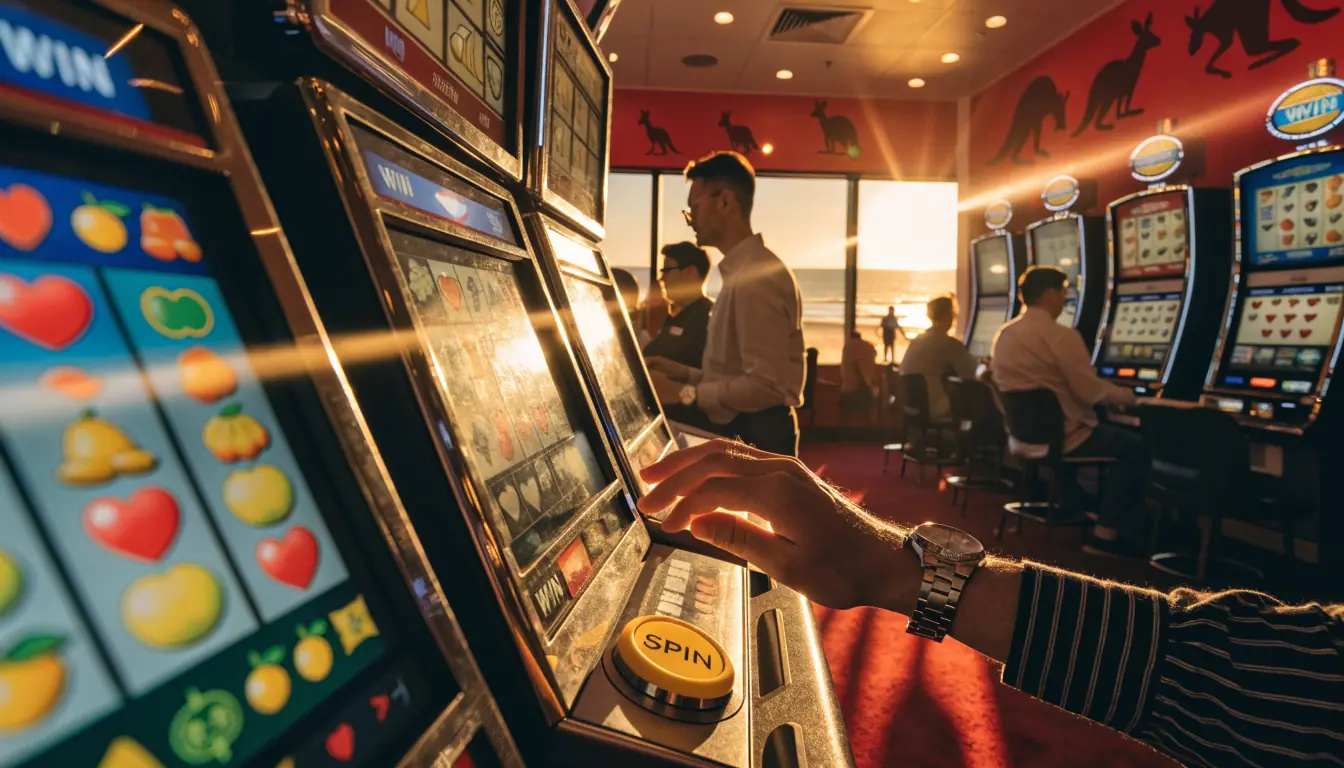
When you walk into an Australian pub or club, you will often find a dedicated gaming room. These spaces function as parlour casino areas within the broader venue, built specifically around electronic gaming machines. Pokies are widely used in Australian pubs, clubs, and casinos, making these designated rooms a standard feature of the local hospitality landscape rather than a rare addition.
The layout of a parlour casino area is straightforward. You will usually see rows of machines arranged to allow venue staff clear sightlines for monitoring the room. The day-to-day operation of these areas relies heavily on cash transactions. Players insert banknotes directly into the machines to begin play and cash out their credits at the end of a session.
This reliance on cash creates a distinct challenge for venue operators and regulators alike. The high volume of physical currency changing hands makes it difficult to track the origin and movement of funds. To address this, regulators are pushing for structural changes to how these machines operate.
According to facctum.com, the adoption of cashless, account-based pokies improves traceability and reduces anonymity. Instead of feeding banknotes into a machine, you would log into an account that records every aspect of your session. Transparent, account-based pokies provide full traceability of deposits, gameplay, and withdrawals.
For a pub or club, moving to an account-based system means the parlour casino area no longer deals in anonymous physical cash. Every deposit you make and every credit you withdraw ties back to a verified identity. This shift alters the fundamental way these venue gaming rooms function. It replaces the manual counting of cash drops with a digital ledger that regulators can audit.
For you as a player, this means the parlour casino experience inside your local venue is gradually shifting away from the traditional cash-in, cash-out model. The physical machines remain a central feature of pubs and clubs, but the mechanism driving them is becoming directly tied to verifiable player accounts, fundamentally changing how the local venue gaming room operates.
VIP Parlour Casinos: Premium Services and Regulatory Expectations
VIP parlour casinos cater to players seeking higher-stakes environments and premium services. These venues offer exclusive areas and dedicated amenities, distinct from standard parlour offerings. However, operating larger volumes of electronic gaming machines triggers stricter compliance obligations.
When an operator runs more than 15 pokies, regulatory expectations escalate. Under these conditions, venues must appoint a designated compliance officer and conduct thorough risk assessments. They are required to implement AML/CFT programs and perform comprehensive customer due diligence. Additionally, these operators must report any cash transactions exceeding AUD 10,000.
The stakes for non-compliance extend beyond standard penalties. An amendment to the Casino Control Act 1992 allows NSW casino operators to be fined up to AUD 100 million for compliance failures. This reflects a broader regulatory shift toward enforcing stricter oversight in environments where high-volume cash transactions occur.
You should understand that premium services do not exempt these venues from scrutiny. The increased financial activity in VIP areas requires rigorous traceability and adherence to reporting protocols. Operators must maintain strict AML frameworks to manage the elevated risks associated with high-stakes play.
Pokie Parlour Bonus Mechanics and Common Pitfalls
Understanding how a pokie parlour bonus is applied to your account helps you recognize operational risks. When you claim these offers, the promotional credits sit in a separate balance. You cannot withdraw this balance immediately; it exists to fund further play. Accessing the actual cash out function requires completing identity verification using a government-issued ID beforehand, ensuring funds move through traceable channels rather than anonymous cash handovers.
This intersection of bonus credits and cash access creates vulnerabilities. According to complyadvantage.com, money mules are recruited to launder money through pokies. Criminals exploit the deposit and withdrawal cycle to create a facade of legitimate winnings. To identify this behaviour, AUSTRAC highlights specific red-flag indicators. These include unusually high cash access, large deposits, cash transfers, casino disbursement checks, and certain occupations.
When bonus credits are cashed out alongside illicit funds, the transaction sequence obscures the dirty money’s origin. Monitoring these withdrawal patterns helps operators distinguish between routine promotional use and deliberate structuring tactics. Recognizing these pitfalls protects you from becoming an unwitting participant in broader financial schemes.
How do recommended online casinos ensure game fairness?
Electronic gaming machines calculate outcomes using a built-in random number generator. The mathematical architecture of these machines ensures that, over time, cumulative wagers result in a net loss for the player base, while transparent account-based systems provide full traceability of gameplay.
Are my personal and financial details safe?
Operators with more than 15 pokies must implement AML/CFT programs and perform customer due diligence to keep your data secure. Additionally, the adoption of cashless, account-based gaming improves traceability and reduces anonymity, helping to protect your financial details.
How can I verify if a gambling operator is legal?
You can check if an operator is registered with AUSTRAC, as venues with up to 15 pokies must register and keep identification records. Larger operators with more than 15 pokies must appoint a compliance officer, conduct risk assessments, and face fines of up to AUD 100 million for compliance failures in NSW.
Are crypto casinos legal in Australia in 2026?
No. The Interactive Gambling Act of 2001 makes it an offence for online operators to offer real-money gambling to Australian residents.
Published by the Casino Live Portal team.